Source: Cottonseed
There are many reasons why dairy and beef producers must reduce or replace forage diets, from forage quality variation and weather to availability patterns and pricing. The key to making a reduced forage diet work and stretching your supply? Whole cottonseed.
WHEN FORAGE QUALITY IS IN QUESTION
When environmental conditions and economic factors cause forage quality to diminish, opting for a low forage diet with supplementary ingredients has upsides. However, using less forage or feeding lower quality forage doesn’t mean you have to sacrifice overall nutrition quality.
“Whole cottonseed is the best concentrate source to use as a forage extender,”1said Maurice Eastridge, a professor and extension dairy specialist at The Ohio State University.
This is because whole cottonseed is an effective source of energy, fat, fiber2 and protein3. The energy in whole cottonseed is primarily from fat, not starch, meaning it won’t interfere with forage digestion the way other inputs such as corn can4,5. This combination of nutritional benefits makes it an ideal input to mix with low-quality forage or to replace low-quality forage altogether.
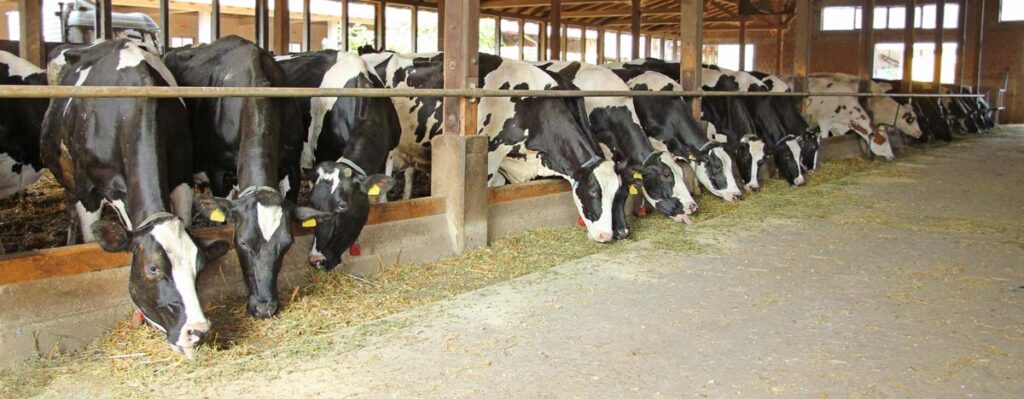
WHEN FORAGE IS LESS READILY AVAILABLE
Because it’s a three-in-one nutrient source with high palatability, whole cottonseed can fill the gap as a reliable one-ingredient substitute for forage. It maintains the delicate balance of fiber and starch that both dairy and beef cattle need.
WHEN WHOLE COTTONSEED IS MORE ECONOMICAL
As commodity prices vary, building a feed ration that serves both your economic and nutritional interests can seem challenging. When forage prices increase, whole cottonseed can be effectively supplemented in the total mixed ration, typically at a competitive price. This gives you the flexibility to adjust rations when it makes sense to achieve higher potential return on investment.
HOW CAN I GET STARTED?
From its start in the Cotton Belt, to its growth with dairy and cattle operations across the country, whole cottonseed is readily available with stable distribution channels. This cotton byproduct can be fed after ginning without any processing. Plus, it has few requirements for handling, meaning it’s a convenient option for producers to source and acquire. Decreasing the amount of inputs to source, store in commodity bays and mix into the feed reduces logistical challenges for dairy and beef farmers.
Tip: Proper whole cottonseed storage and handling can maximize the nutritional benefits offered and enhance efficiency.
Whole cottonseed can do more than just supplement forage; it can make every pound of available forage go further.
If you’re ready to implement whole cottonseed into your feed program, get connected with a seller or request a quote through the Cottonseed Marketplace: a hub for sourcing and buying whole cottonseed that can be especially convenient as forage prices ebb and flow during the 2025 crop year.
1 Eastridge, Maurice. (2016). Feeding Low Forage Diets to Dairy Cows. Ohio State University Extension. https://dairy.osu.edu/sites/dairy/files/imce/DIBS/DIBS33-16_Feeding_Low_Forage_Diets_to_Dairy_Cows.pdf.
2 Kellogg, D.W., Pennington, J.A., Johnson, Z.B. and Panivivat, R. (2001). Survey of management practices used for the highest producing DHI herds in the United States. J. Dairy. Sci. Vol. 84, Supplement, E120– E127. doi:10.3168/-jds.S0022-0302(01)70206–8.
3 Warner, A.L., et al. (2020). Effects of utilizing cotton byproducts in a finishing diet on beef cattle performance, carcass traits, fecal characteristics, and plasma metabolites. Am. Soc. of Anim. Sci. Vol. 98, issue 2, doi:10.1093/jas/skaa038.
4 Horner, J.L., et al. (1988). Effects of niacin and whole cottonseed on ruminal fermentation, protein degradability, and nutrient digestibility. J. Dairy Sci. Vol. 71, no. 5, pp. 1239–1247., doi: 10.3168/jds.S0022-0302(88)79679-4.
5 Lardy, G. (2018). Feeding corn to beef cattle. North Dakota State University. https://www.ag.ndsu.edu/PUBLICATIONS/livestock/feeding-corn-to-beef-cattle.